
President Ali Announces Dedicated AI Branch as Defence Spending Shifts Toward Modernisation
Dr. Mohamed Irfaan Ali has announced plans to establish a dedicated technology and artificial intelligence (AI) branch within the Guyana Defence Force, signalling a significant shift in the country’s defence strategy.
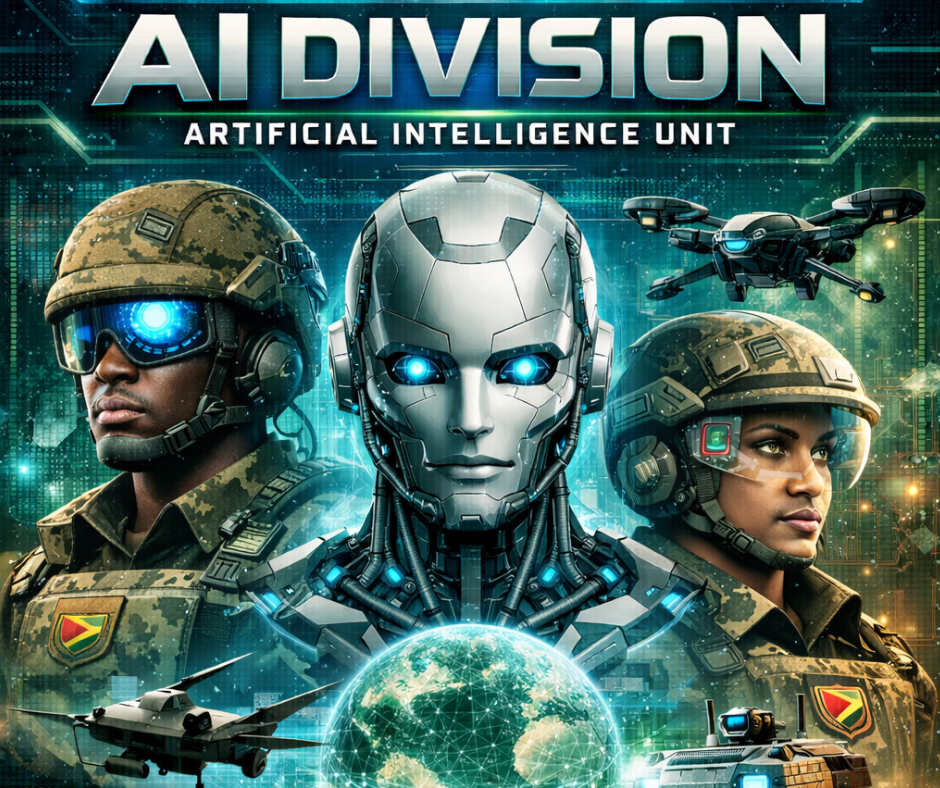
The announcement was made on Thursday at the GDF’s Annual Officers’ Conference, where the Commander-in-Chief outlined major investments and a comprehensive plan to modernise national defence capabilities.
According to President Ali, the initiative reflects a deliberate transition from sustaining the Force to fundamentally transforming it to confront modern and future security threats.
The President disclosed that defence spending has increased substantially over the past five years, with capital expenditure rising nearly tenfold. In 2019, total GDF expenditure stood at approximately $13.9 billion, largely allocated to recurrent costs such as salaries and routine operations.
By 2025, capital expenditure had grown to an estimated $10.35 billion, underscoring a clear policy shift toward infrastructure development, acquisition of new assets, and the expansion of advanced operational capabilities.
Central to this transformation is the proposed establishment of a dedicatedtechnology and artificial intelligence branch with direct command authority.
President Ali described artificial intelligence as a cornerstone of Guyana’s future defence architecture, highlighting its importance in intelligence gathering, data analysis, and strategic decision-making. The new branch will focus on innovation and the integrated application of advanced technologies across all defence operations.
The President further explained that the AI initiative forms part of a broader strategy linking people, capability, and capacity. A comprehensive 15- to 20-year gap analysis will be undertaken to identify the future skills and resources required by the GDF, enabling recruitment and training programmes to be aligned with emerging defence needs.
He also emphasised the necessity of safeguarding critical infrastructure, including telecommunications networks, subsea cables, and oil and gas facilities, where AI-enabled surveillance and intelligence systems are expected to play an increasingly vital role.